
Micro LED Market Forecast and Its Grinding & Polishing Application Scenarios
01 Advantages and Application Scenarios of Micro-LED
------------------ Micro-LED Advantages ------------------
① High brightness and high contrast ratio
② Ultra-high resolution and great flexibility
③ Lower power consumption and long service life
④ Excellent light transmittance
------------------ Micro-LED Application Scenarios ------------------
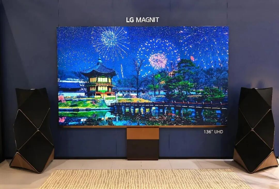
① High-end TV
→ Next-generation home TV solution with superior image quality far exceeding traditional displays:
High brightness, low energy consumption, long service life, high contrast
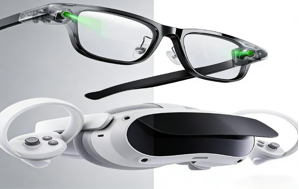
② Wearable Devices
→ The optimal technology that balances "transparency + immersion":
High brightness, high efficiency, excellent outdoor performance

③ VR & AR Devices
→ Deliver ultra-high resolution and low-latency solutions:
The next evolutionary direction for VR/AR industry
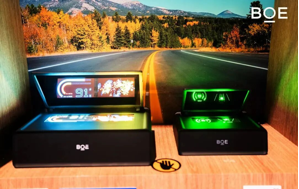
④ Automotive Display Screens
→ Provide clearer and more delicate information display solutions:
High fluency, high contrast and high definition
02 Micro-LED Substrate Selection
------------------ Micro-LED Substrate ------------------
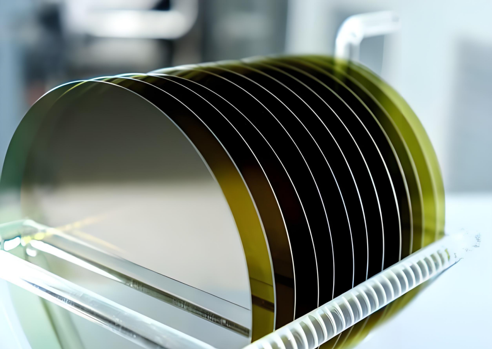
The core function of the substrate is to provide a "growth platform" for the light-emitting layer. It needs to meet three key requirements: lattice constant matching (reducing material defects), high thermal conductivity (heat dissipation), and high mechanical strength (adapting to mass transfer). There are four mainstream types of substrates:
Sapphire (Al₂O₃) | Low cost, good light transmittance, mature mass production technology | High lattice mismatch rate (13% difference with GaN), low thermal conductivity (≈40 W/m·K) | Mid-to-low-end Micro-LED (commercial splicing screens, affordable TVs) |
Silicon-based (Si) | Ultra-low cost (mature semiconductor industry substrate), supports large-size (12-inch) wafers, compatible with CMOS driver integration | High lattice mismatch rate (≈17%), large thermal expansion coefficient difference (prone to cracking) | Mainstream mass production direction in the future (defect problems to be solved) |
GaN Homogeneous Substrate | Complete lattice matching (0% mismatch rate), highest luminous efficiency | Extremely high cost (more than 3 times that of SiC), difficult mass production | Laboratory-level high-end devices (such as laser Micro-LED) |
------------------ Future Trends of Micro-LED Materials ------------------
The Micro-LED semiconductor material system is centered on GaN-based compounds (blue/green light), with GaAs-based/nitride materials as red light supplements. Substrate materials are in a transition period from "sapphire" to "silicon-based".
Breakthroughs in material technology (especially red light efficiency, silicon-based integration and full-color compatibility) are the key for Micro-LED to shift from "high-end customization" to "consumer-grade popularization". In the next 3-5 years, with the maturity of red light materials and low-cost substrates, Micro-LED costs will drop significantly, gradually replacing OLED and Mini LED to become the mainstream display technology.
03 Application of Thinning Grinding Wheels in Micro-LED Production
------------------ Substrate and Epitaxial Growth ------------------
Process | Core Operation | Consumables |
Substrate Selection and Pretreatment | Select mainstream sapphire, SiC, low-cost silicon or flexible substrates (such as PI), and perform cleaning, thinning and polishing to remove impurities | Thinning grinding wheel |
Epitaxial Layer Growth | Adopt MOCVD (Metal-Organic Chemical Vapor Deposition) technology to grow AlN buffer layer, N-type GaN layer, InGaN/GaN quantum well light-emitting layer and P-type GaN layer layer by layer | — |
Epitaxial Wafer Inspection | Detect luminous wavelength and crystal quality through PL (Photoluminescence) and XRD (X-ray Diffraction) | — |

------------------ Micro-LED Chip Manufacturing ------------------
Process | Core Operation | Consumables |
Chip Patterning | Sapphire lithography + etching | — |
Electrode Preparation | Metal deposition + stripping | — |
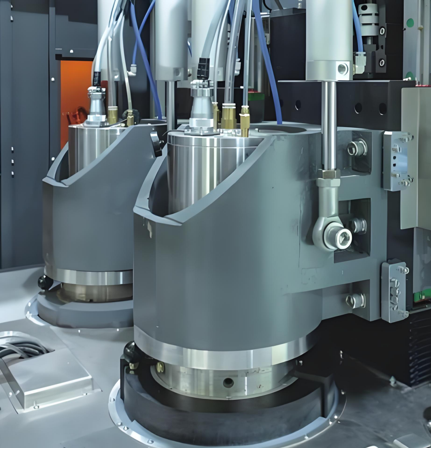
Chip Thinning | Backside grinding + polishing | Thinning grinding wheel |
Laser Lift-off | — | — |
Chip Dicing and Sorting | — | — |
04 China Micro-LED Market Forecast
------------------ China Market Driving Factors ------------------
① Technological Breakthroughs and Cost Reduction Forecast
2026-2027: The yield rate will increase from the current less than 10% to over 30%, and the cost will drop below USD 100 per square meter.
2028-2030: Mass transfer technology will mature, with costs falling to 1.5-2 times that of OLED, enabling large-scale commercial application.
② Strong Policy Support
National Strategy: Listed as a key supported strategic emerging industry in the 14th Five-Year Plan.
Local Policies:
Shanghai: Maximum subsidy of RMB 10 million for key Micro-LED technology R&D;
Xiamen: Build G6-level mass transfer pilot platform to provide full-chain services;
Beijing Economic and Technological Development Zone: Provide special support for Micro-LED technology in the XR field.
③ Industrial Chain Synergy Effect
China has prominent advantages in LED chips (accounting for 60% of global production capacity), TFT backplanes and display terminals, providing strong support for the Micro-LED industry.

------------------ China Market Scale Forecast ------------------
Key Market Growth Nodes
2025: Small-scale trial production, high-end commercial market launch, market scale exceeding RMB 5 billion, with the annual consumption of thinning grinding wheels expected to exceed 1,000 pieces.
2026-2028: Industry outbreak period. With improved yield rate and reduced costs, Micro-LED will penetrate mid-to-high-end consumer electronics fields.
2030: Large-scale commercialization, occupying 30%-45% of the global market share, with a market scale of RMB 48-85 billion. The annual consumption of thinning grinding wheels is expected to exceed 10,000 pieces.
China's Micro-LED industry will witness explosive growth, with 2026-2028 as the critical transition period. Driven by technological breakthroughs and cost reduction, the market will gradually expand from high-end commercial scenarios (2025-2027) to consumer electronics scenarios (2028-2030), eventually forming a mature market worth tens of billions by 2030. Boasting broad development prospects, China is expected to become the world's largest production and consumption market for Micro-LED by 2030.


